
Family & Cosmetic Dental PLLC
- Home
- Our Practice
- Services
- Patient Information
- Blog
- Contact Us
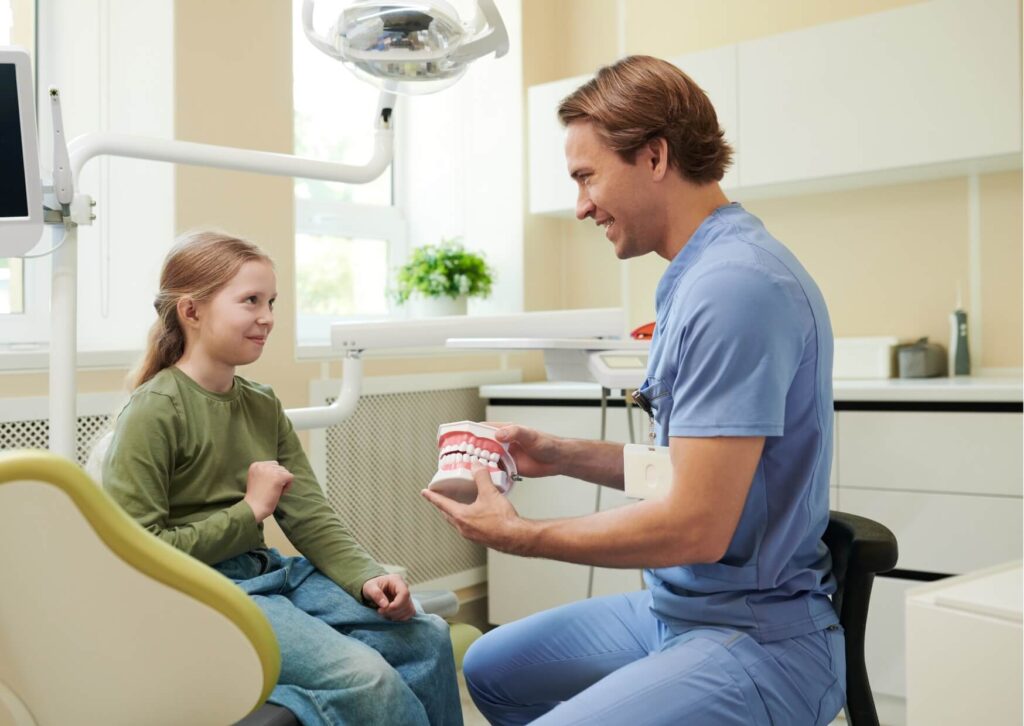
A century ago, many families did not bring children to the dentist until school age, often after pain had already started. Modern pediatric dentistry changed that pattern because decay can begin soon after teeth come through the gums.
The best answer to when you should take your child to the dentist is this: by age 1, or within 6 months of the first tooth appearing, whichever comes first. That recommendation may sound early, but it gives a dentist a chance to check growth and catch small problems before they become bigger ones.
This age one dental visit guidance is widely recommended in pediatric dentistry. It is based on prevention, not on assuming something is wrong.
Baby teeth are temporary, but they still matter. They help children chew, support speech development, hold space for adult teeth, and contribute to comfort and sleep.
Family & Cosmetic Dental PLLC in Glendale, AZ provides pediatric dentistry for infants and young children and can offer the kind of early exams and guidance many families find helpful.
As the first teeth erupt, bacteria can attach to the tooth surface and form plaque, a sticky film that feeds on sugars. Newly erupted teeth are also more vulnerable while enamel is still maturing.
That is one reason early childhood cavities can develop faster than many parents expect. Learning how to prevent cavities early can make a real difference.
Frequent exposure to milk, formula, juice, sweetened drinks, or prolonged overnight feeding can raise cavity risk, especially if teeth are not cleaned regularly. Repeated exposure over time is often more important than one isolated treat.
A dentist also checks the gums, tongue, oral tissues, and the way the jaws are developing. These details may seem minor in infancy, but they can affect comfort and function later.
For most children, the first visit should happen by their first birthday. After that, the dentist will recommend a follow-up schedule based on cavity risk, feeding habits, fluoride exposure, oral hygiene, and anything seen during the exam.
If you want more detail about routine timing, see our article on children's dental checkups. Some children should be seen even sooner than age 1.
That includes infants with tooth discoloration, mouth injury, persistent sores, feeding problems related to the mouth, or a tooth that erupted with an unusual shape or surface. Children with special health care needs, dry mouth, developmental differences, or enamel defects may also benefit from earlier monitoring.
Early prevention is usually easier, less stressful, and less expensive than treating advanced decay later. For many families, that alone makes the first visit worthwhile.
Many first visits happen with the child sitting on a parent’s lap. The dentist checks the teeth, gums, bite, oral tissues, and jaw development while looking for signs of early childhood caries, the clinical term for decay in infants and young children.
These checks are part of routine dental exams. If that term comes up, it simply means cavities in baby teeth during the early years.
The dentist may also talk about brushing technique, fluoride, teething, thumb or pacifier habits, and which eating or drinking patterns raise concern. Families may also get practical tips on how to properly brush and floss.
Some practices apply fluoride treatment, a protective coating that helps strengthen enamel. Many parents are surprised by how simple the first visit is, and that simplicity is part of its value.
A child should be evaluated promptly if you notice white chalky spots, brown areas, pits, broken teeth, gum swelling, persistent bad breath, or sensitivity during eating. These changes can point to decay, enamel weakness, infection, or irritation.
Dental injuries matter too, even if a child seems calm afterward. A bumped, loosened, displaced, or darkening tooth can affect the nerve and supporting tissues, and facial swelling or fever with dental pain needs urgent dental or medical assessment.
In urgent situations, families can seek emergency dental care or medical attention. If a child refuses food because chewing hurts, wakes at night with mouth pain, or has bleeding that does not stop as expected after an injury, a same-day call makes sense.
Some people still assume cavities in baby teeth do not matter because those teeth will fall out anyway. In practice, that is not true.
Painful or infected baby teeth can affect eating, sleep, and concentration. They can also lead to early tooth loss, which may change spacing and make future orthodontic issues more likely.
For more on timing and options, see our article on early orthodontics. You can also read more about the importance of primary teeth to understand how baby teeth support healthy development.
Under each baby tooth, the adult tooth is forming in close relationship to the roots and surrounding bone. Protecting primary teeth helps protect the environment where permanent teeth develop.
Tooth decay is not caused by sugar alone. It develops through a combination of oral bacteria, fermentable carbohydrates such as sugars and starches, tooth structure, saliva, and time.
At a basic level, bacteria in plaque use sugars and produce acids. Those acids pull minerals out of enamel in a process called demineralization, and if that happens more often than the tooth can repair itself, a cavity can form.
This is why sipping sweet drinks for long periods, sleeping with a bottle, or frequent sticky snacks can be more harmful than many families realize. The pattern of repeated exposure is often the bigger issue.
A dentist may also ask whether caregivers have had frequent cavities. That is not about blame; it helps estimate the child’s risk and decide how closely to monitor the teeth.
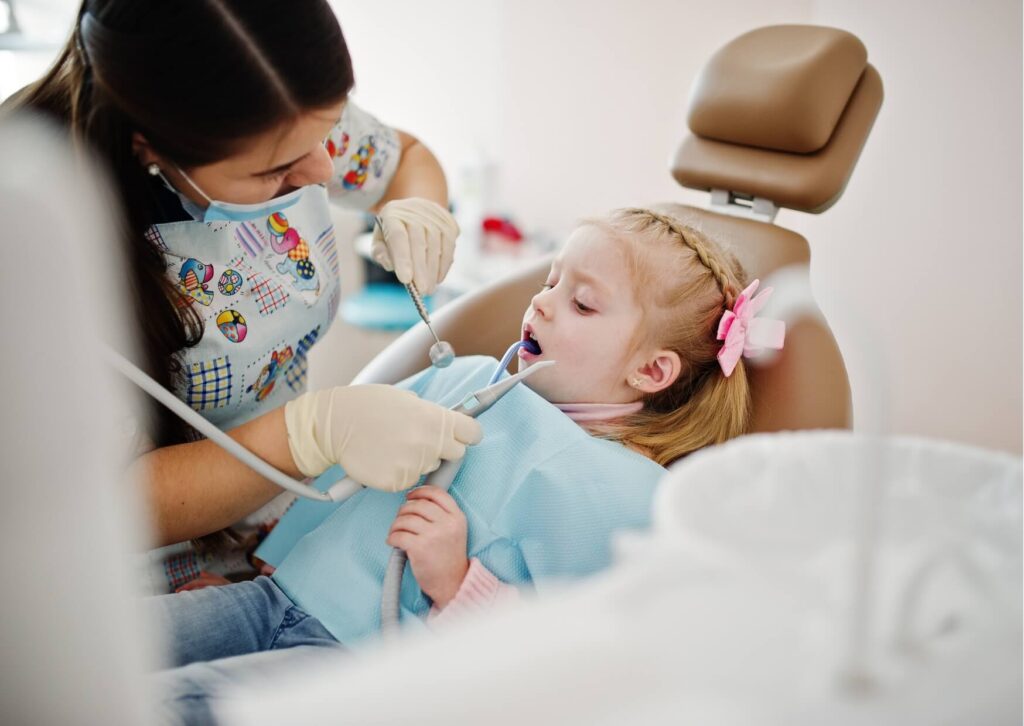
Choose a time of day when your child is usually rested and fed. Bring a favorite comfort item if needed, and use simple language such as saying the dentist will count and look at the teeth.
It is usually better not to promise that nothing unusual will happen or that everything will be fun. Children often do best when adults sound calm, matter-of-fact, and confident.
If your child has sensory sensitivity, developmental differences, or medical complexity, tell the office ahead of time. A good pediatric dental team can often adjust the pace, lighting, language, and exam style.
Dentists focus on the teeth, gums, oral tissues, and bite, but the mouth is part of the whole body. If a child has fever, significant swelling, trouble swallowing, dehydration, or an injury involving the face or head, medical evaluation may be needed along with dental care.
This overlap matters even more in very young children, who may show oral pain as fussiness, poor feeding, or sleep disruption instead of a clear complaint. When symptoms are severe, changing quickly, or hard to interpret, it is best to get professional guidance rather than guess.
If you are asking, “when should I take my child to the dentist?”, the practical answer is earlier than many families were once told. By the first birthday is the standard most dentists consider safest and most useful.
That early visit is not about expecting a problem. It is about creating a baseline, lowering risk, and giving parents clear guidance before pain or decay enters the picture.
A short preventive visit in the first year can make later dental care easier for both children and parents. It also gives families a trusted place to turn when new questions come up.
Family & Cosmetic Dental PLLC in Glendale, AZ offers pediatric dentistry for infants and children and serves families from nearby Phoenix and Peoria; call (602) 866-9825to schedule an appointment.
A delayed first tooth does not always mean there is a problem, but it is still reasonable to ask a dentist or pediatrician about it. The answer depends on overall growth, medical history, and whether other developmental milestones are on track.
No. Waiting until all baby teeth erupt may delay prevention during the period when the first teeth are most vulnerable. The first visit is meant to start early, not after the full set appears.
Yes. Home brushing is essential, but it does not replace an exam. A dentist can spot early changes that are easy to miss at home, including enamel defects, early decay, and bite issues.
Routine teething alone usually does not require an urgent dental visit. However, if symptoms seem severe, prolonged, or include swelling, mouth sores, feeding refusal, or fever that does not fit a simple teething pattern, an evaluation is appropriate.